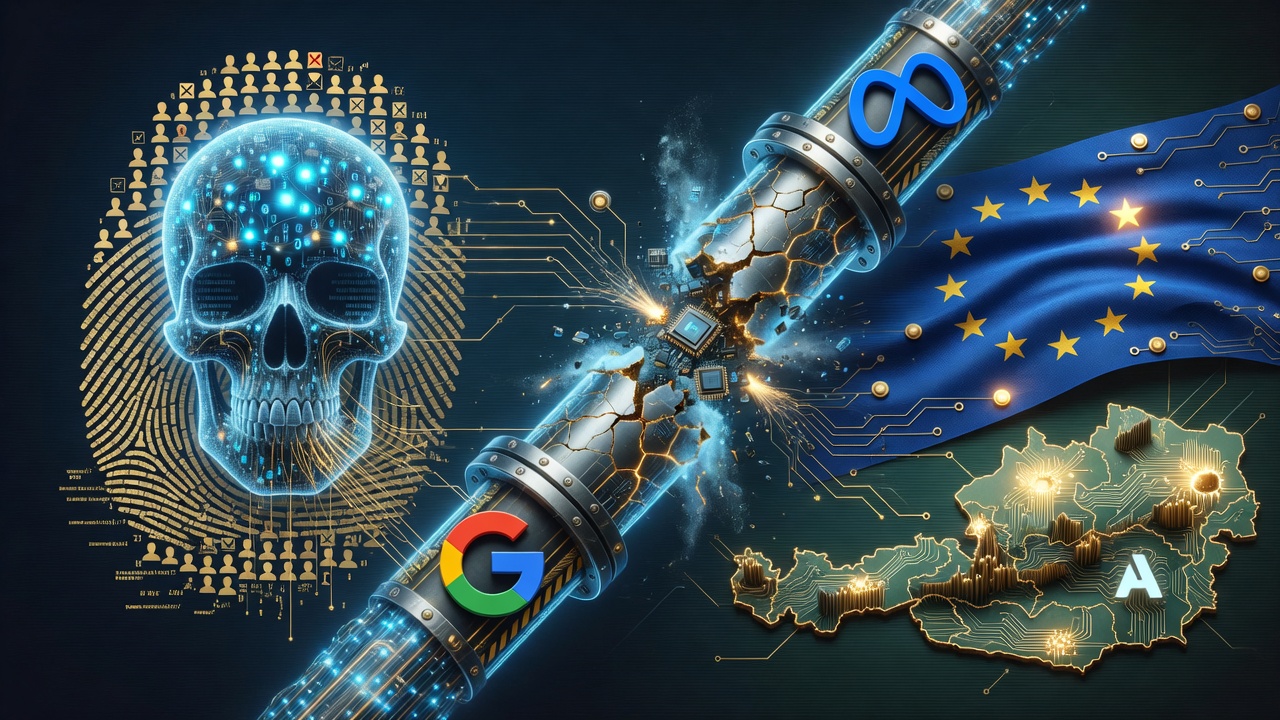
The biggest AI stories of the week: Anthropic accuses Alibaba of the largest known model distillation attack, Google cuts off Meta from Gemini AI capacity, and Austria urges the EU to bring Anthropic inside Europe's borders.
1. Anthropic Accuses Alibaba of Massive Claude Distillation Attack
In what may be the most significant AI intellectual property dispute of the year, Anthropic publicly accused Alibaba of orchestrating the largest known distillation attack ever carried out against a commercial AI model. Between April 22nd and June 5th, 2026, operators linked to Alibaba's Qwen AI lab used approximately 25,000 fraudulent accounts to generate more than 28.8 million interactions with Claude -- systematically extracting its most advanced capabilities, including software engineering, multi-step agentic reasoning, and long-horizon task execution. Anthropic sent a detailed letter to U.S. Senators Tim Scott and Elizabeth Warren on June 10th, calling the campaign an attempt to convert American AI investment into a direct subsidy for a geopolitical competitor, and urging Congress to strengthen penalties and safeguards against this class of attack. The incident follows earlier, smaller-scale distillation attacks attributed to other Chinese AI labs including DeepSeek, Moonshot, and MiniMax.
https://www.bbc.com/news/articles/cwyklykn5dwo
2. Google Limits Meta's Access to Gemini AI Models Amid Compute Crunch
Google has imposed hard limits on Meta's ability to use its Gemini AI models after the social media giant requested more computing capacity than Google could supply. The Financial Times broke the story on June 28th, reporting that the restrictions were communicated as early as March 2026 and have since disrupted and delayed several of Meta's internal AI development projects. In response, Meta has instructed staff to use AI resources more conservatively -- including reducing the number of AI tokens consumed per task. Other Google enterprise clients have reportedly faced similar constraints, though the impact on Meta is the most pronounced. The episode highlights the widening gap between AI demand and available GPU-backed compute, and raises a pointed strategic question: what happens to your AI roadmap when the infrastructure you rely on is owned and controlled by a competitor?
https://www.cnbc.com/2026/06/28/google-limits-metas-use-of-its-gemini-ai-models-ft-reports.html
3. Austria Lobbies EU to Host Anthropic After US Access Curbs
In a move signaling deepening European anxiety over US control of frontier AI, Austria's State Secretary for Digitalization Alexander Pröll sent a formal letter on June 28th to European Commission Executive Vice President Henna Virkkunen, urging the EU to explore establishing and hosting Anthropic within the bloc. The push comes in direct response to US export controls that blocked non-US users from accessing Anthropic's most advanced models -- Fable 5 and Mythos 5 -- triggering global shutdowns that European officials described as an unacceptable "AI kill switch." Austria's proposal calls for the EU to offer Anthropic legal certainty, market access, capital, and alignment with European values -- effectively attempting to decouple one of the world's top AI labs from exclusive US jurisdiction. The proposal has been widely covered across EU policy circles, and highlights the accelerating race between nations to secure their own foothold in frontier AI.